Communication
Total Communication Approach
The total communication approach is about finding and using the right combination of communication methods for each person. This approach helps an individual to form connections, ensures successful interactions and supports information exchanges and conversations. A combination of methods are used, which reinforce each other and strengthen meaning for the individual.
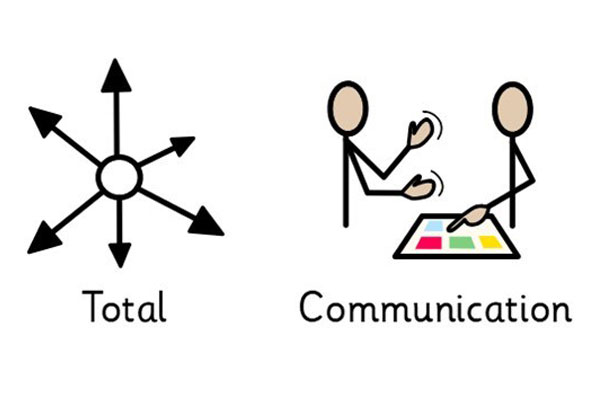
Total Communication can involve:
- clear and simple speech to help people focus on keywords
- the use of gestures, facial expressions, body language and signing
- the use of pictures, photographs, symbols, objects and written words
- the use of sensory cues (e.g., touch and smell)
- opportunities to communicate
- appropriate integration (e.g., level and pace)
- vocalisation, intonation, and verbalisation
- access to modern technology
Total communication is also about creating a positive environment that will help you communicate and interact.
For example, this may mean:
- Changing the lighting in the room.
- Reducing the amount of background noise.
- Moving position so that you can see or hear better.
- Reducing clutter or removing things that are distracting.
Objects of Reference
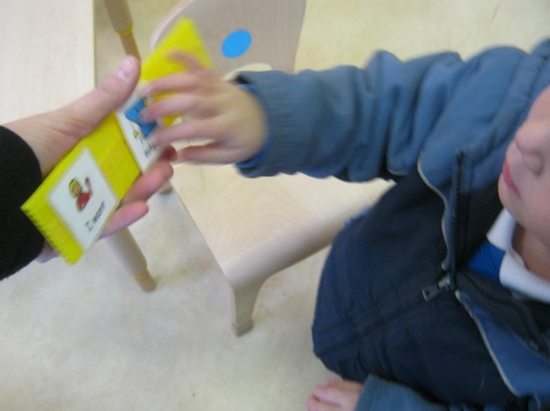
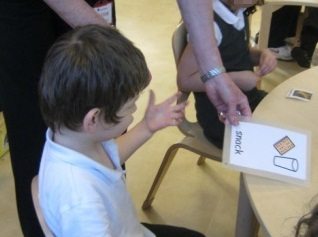
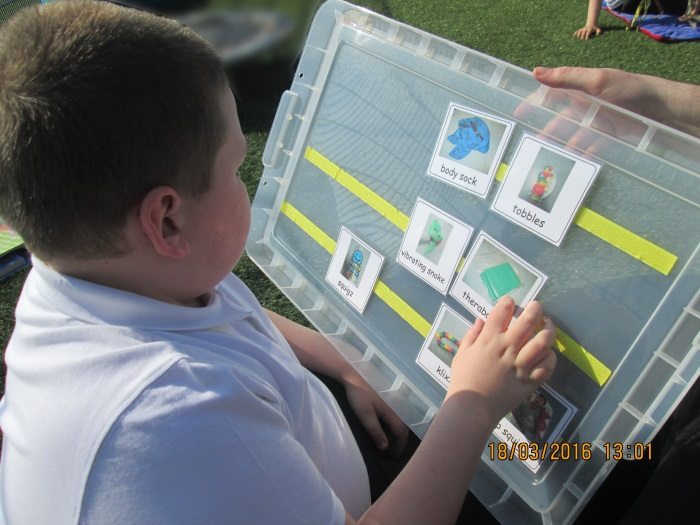
The use of ‘Objects of Reference’ is a simple but powerful and highly effective communication tool. Using objects as a visual cue for a child helps in the following ways:
- helping the child to anticipate what is going to happen next
- help with the understanding of the spoken word
- supports understanding of daily routines
- gives the child the opportunity to bridge the gap of recognising objects to recognising photos

Picture Exchange Communication System (PECS)
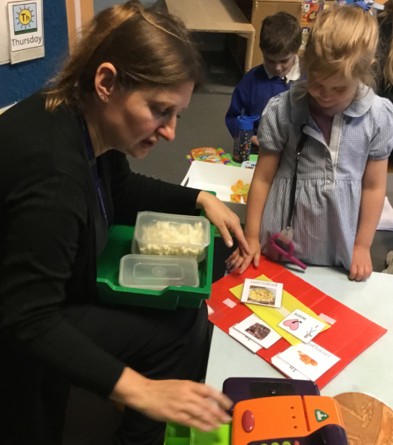
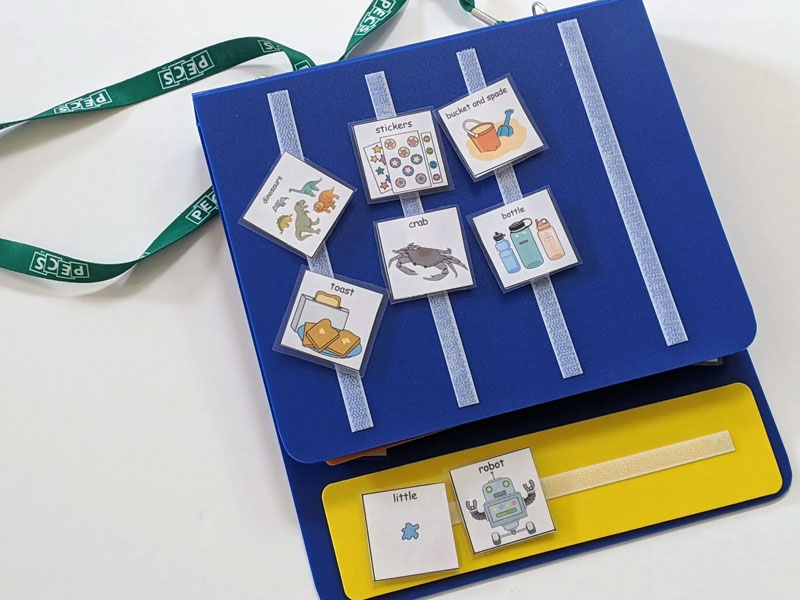
The Picture Exchange Communication System (PECS) is a way for autistic people to communicate without relying on speech. To communicate, people use cards with pictures, symbols, words or photographs to ask for things, comment on things or answer questions.
Symbols
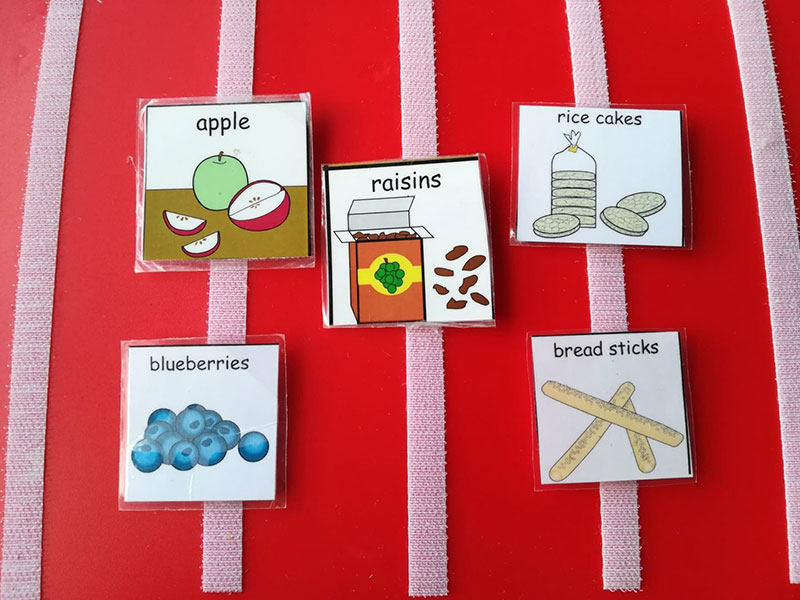
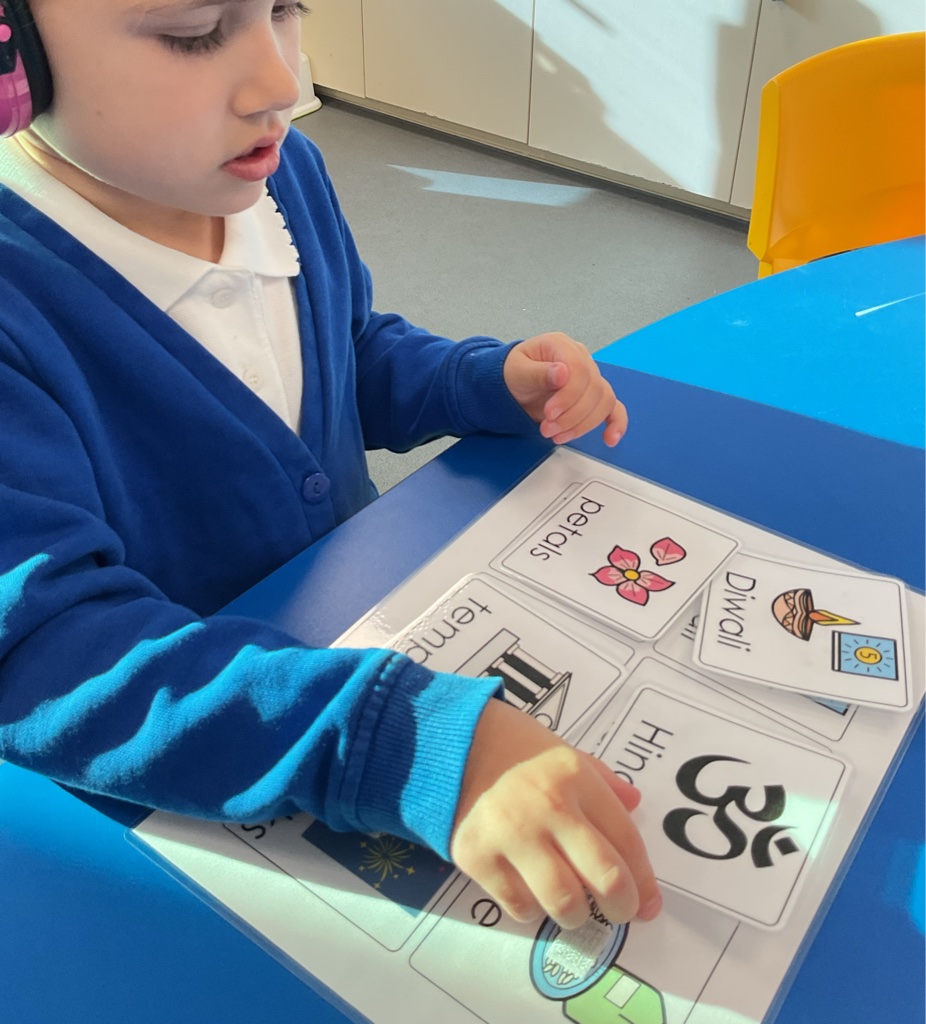
Communicate In Print Symbols are used across the school to support a child’s understanding of spoken or written language.
Symbols are beneficial to use as they last longer than a spoken word and support a child to process what has been spoken or written.
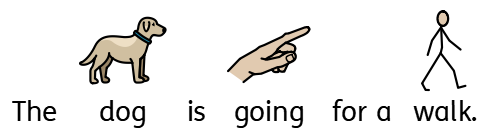
Symbols can be used to support a child’s understanding of key words in short phrases, sentences and paragraphs. Think about the child’s level of understanding and the message you are trying to get across when considering what to symbolise.
Symbolising key words:
Symbolising a whole sentence using a key picture: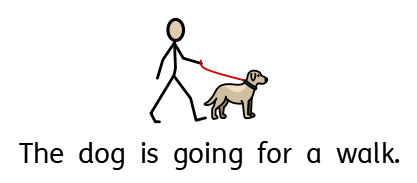
Aided Language Sheets (ALS)
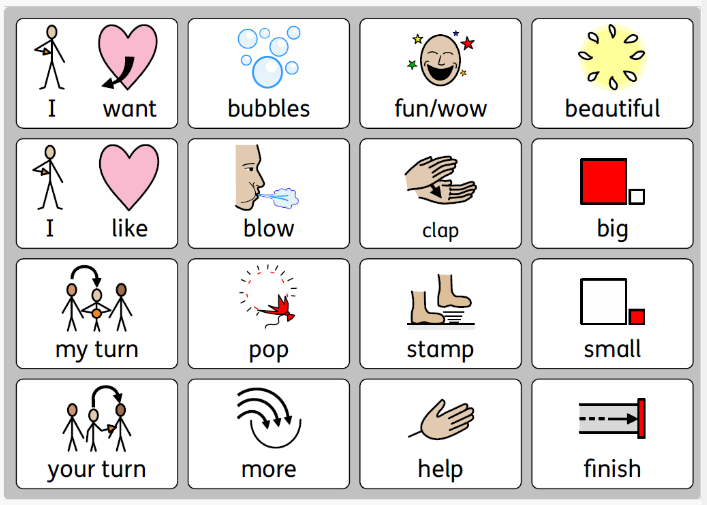
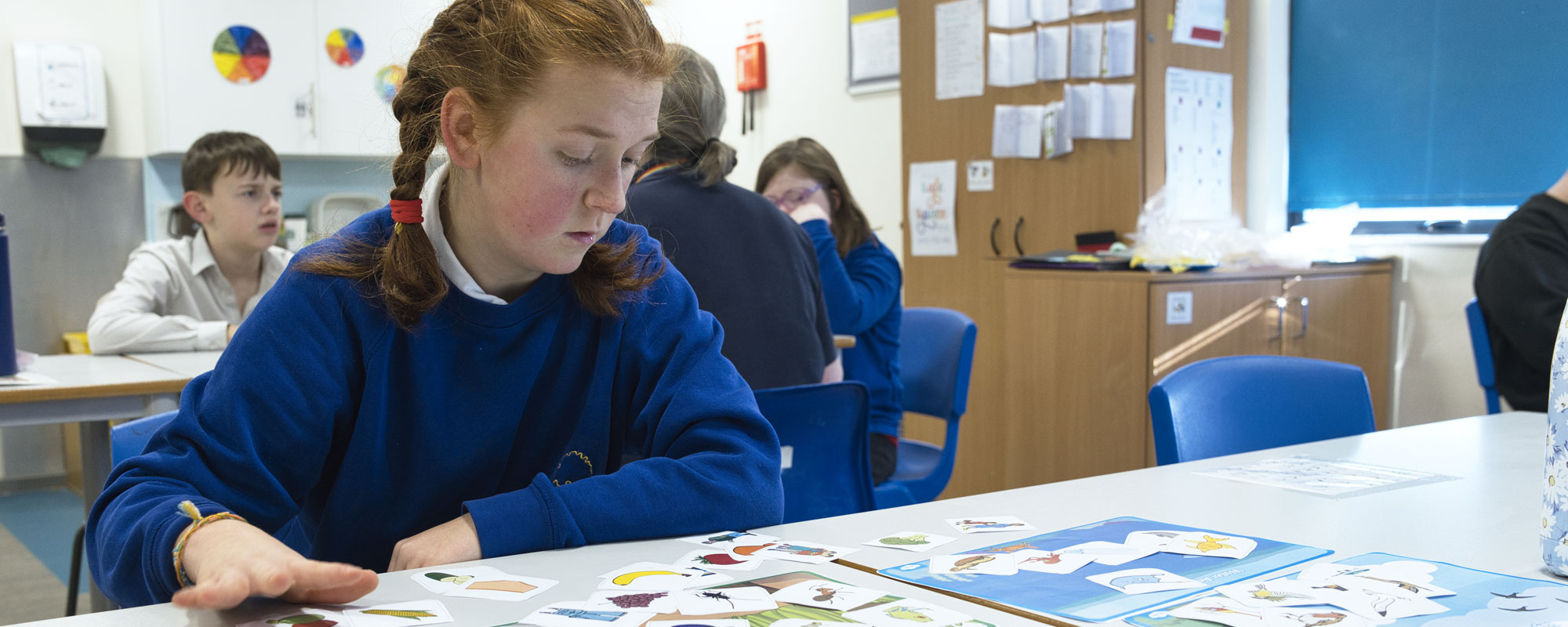
Aided language sheets are single pages with symbols and words related to a topic or activity. Each symbol can be matched with a single word or a short phrase. Aided language sheets support children to communicate with adults and peers in a functional way. They are used alongside spoken words to model key language to a child.
These sheets allow a child to express a variety of communication needs including:
- to share enjoyment
- to comment
- to reject
- to request
- to express emotions and opinions
- to ask questions
The number of pictures used can be changed to best suit the child.
Communication Friendly Environment (CFE)
A communication friendly environment is one that promotes and supports children’s language and communication skills. It is an umbrella term for describing key features of the environment and the way practitioners interact with children.
A communication enabling environment covers three aspects:
- The environment
- The role of the adult supporting language interactions
- Opportunities for supporting language interactions
A communication friendly classroom should make communication easy, effective, and enjoyable. This will provide support for children with speech, language and communication difficulties, enhance communication development universally, and remove barriers to communication. This in turn, will support learning, and social and emotional development.
Intensive Interaction
Intensive Interaction is a type of play-based therapy which works to engage a child who may find it challenging to communicate or interact with those around them. This approach encourages the adult to follow the child’s lead and allows the child to see that their ‘voice’ is valued.
- Mirroring: Copy what the child does. This includes facial expressions, body language, body movements and sounds.
- Expanding – over time: If the child is really aware of you copying and responding well then you could expand on their play a little bit. For example, if they tapped the floor you may gently tap on your arm and see if the response changes.
- Pausing to watch ad respond: Always focus on what the child is doing and how they are reacting to what your actions. Do they look to you/ stop/ smile? Seeing their reaction can help to adapt what you are doing to maintain their interest.
PEIC-D
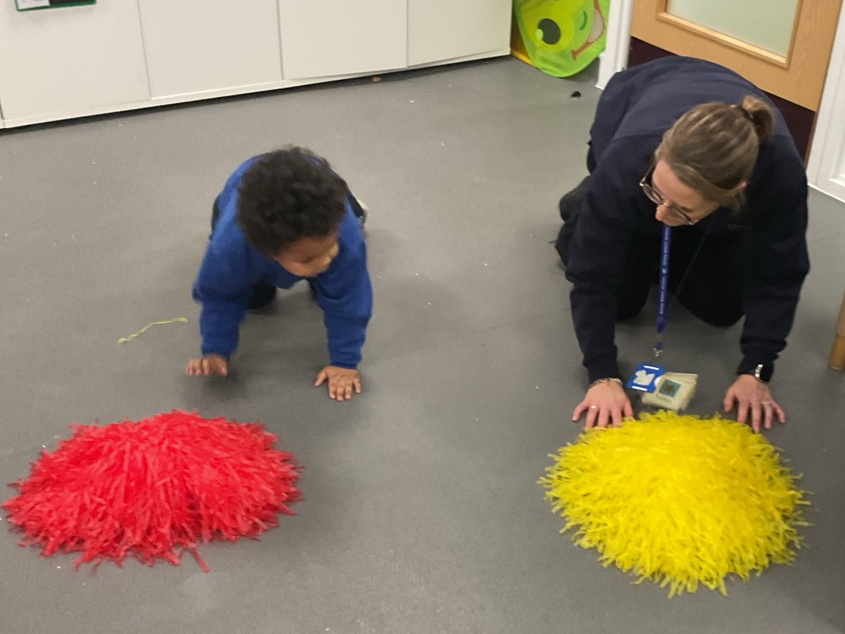
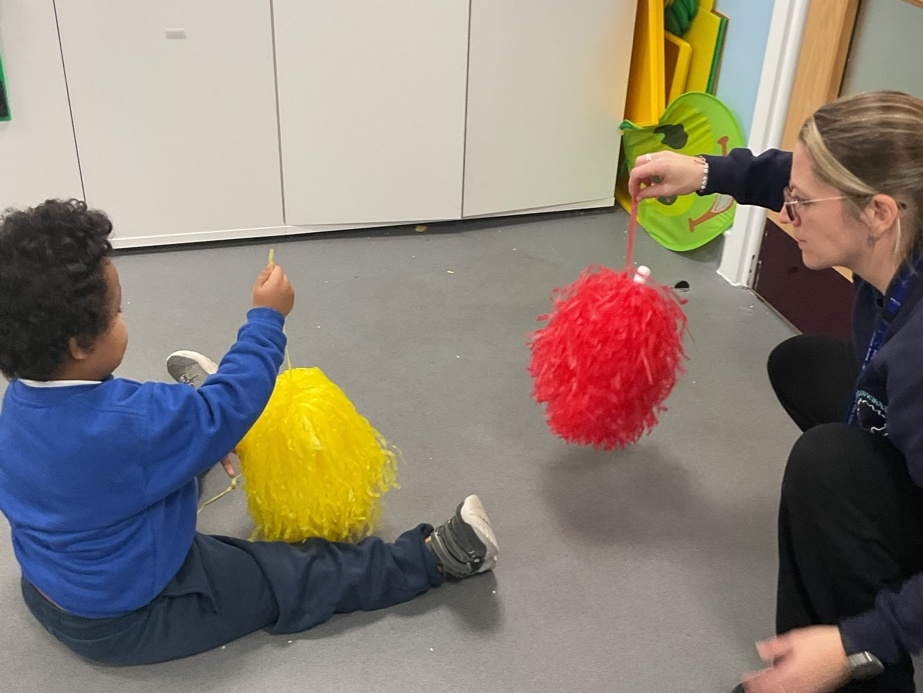
PEIC-D (Promoting Early Interactive Conversations – Dorset): A structured approach to play to support the development of interaction skills such as turn taking and awareness of others. A structured, step-by-step program for young children and those with communication difficulties, particularly autism. It focuses on building fundamental interaction skills like turn-taking, imitation, and tolerance of others through play-based, sensory, and social communication interventions.
Attention Autism
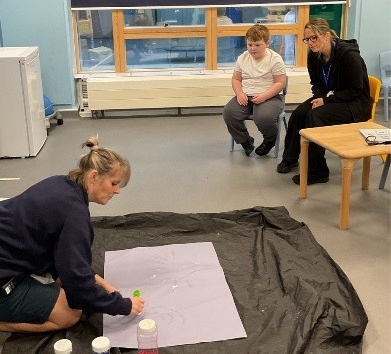
Attention Autism is an intervention approach that aims to work on the early fundamentals of language including awareness of others, attention, listening, shared attention, switching attention and turn-taking.
There are four stages which follow the typical pattern of attention development moving from fleeting attention and highly distractible to well established attention.
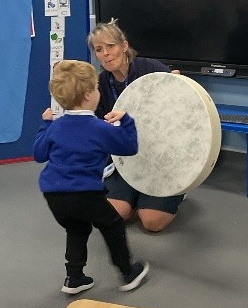
Spoken word – Simple Language
Limited language – Talking in a way that exposes students to the language that they need to understand and use to access the curriculum, get their needs met, and engage with their peers.
Time to process – Giving a pause for a long enough period of time following a comment or instruction to allow the child time to process what has been said and to respond.
Using their students name before speaking – Communication is individualised depending on need e.g. some students may cope with “John can you sit down please” and others may need you to say “John sit.”
Tactile Signing for Sensory Learners (TaSSeLs)
Tactile Signing for Sensory Learners (TaSSeLs) is a way of supporting communication by using simple, meaningful touch cues on the body. It helps children understand key words, actions, or routines especially those who are at the earliest stages of development and may find traditional communication methods challenging. TaSSeLs provides clear, consistent signals that help students make sense of what is happening and what is about to happen.
Visit the TaSSeLs website for more information.
Using AAC Technology
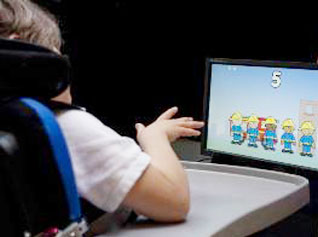
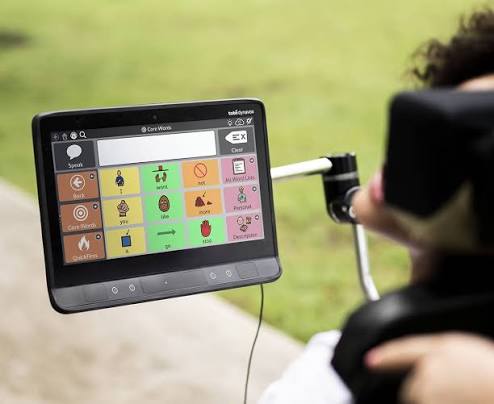
Some of our students use eye-gaze technology, which enables them to control a screen using only their eye movements. This highly specialised assistive technology is particularly beneficial for students with significant motor impairments who are unable to access traditional input methods such as touchscreens, keyboards, or switch systems. By simply looking at symbols, words, or commands on the screen, students can make selections, communicate, and interact with learning activities in a way that promotes greater independence and engagement.
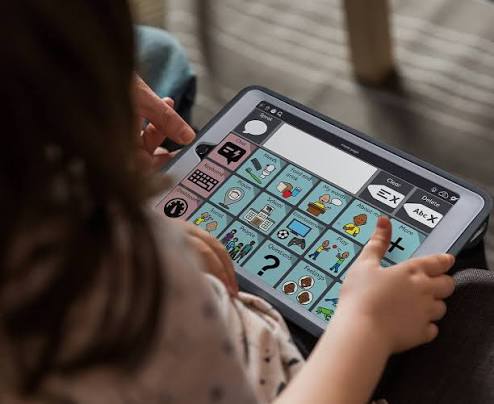
Other students use iPads equipped with augmentative and alternative communication (AAC) applications, such as TD Snap. These apps combine text and images with speech output, allowing students to construct messages that are then spoken aloud by the device. This approach supports communication development, language acquisition, and social interaction, giving students a reliable and personalised voice both in the classroom and beyond.
 TD Snap Help Guide for Parents/Carers
Signalong
Signalong is a registered charity, that provides resources and training in visual communication based on British Sign Language.
They post videos on their Facebook page of signs in action.
Signalong empowers students with impaired communication skills to understand and express their needs by providing sign vocabulary for life and learning.
At Linwood School, we believe that signing supports the language development of many of our students.
All students and staff are encouraged to learn Signalong – so that we can ALL communicate with one another.
Signalong courses are held regularly for school staff and parents/carers.
Signalong Basic Signs
A collection of 19 basic signs requested by our Passenger Assistants but also useful for parents.
Maths Measure Signalong Videos
Signs to support mathematical concepts – useful for teaching maths in real life situations. This collection of videos is measure-themed and includes: balance, compare, float, heavy, less, light, more, same, sink and weigh.
Dorset Children and Young People’s Speech & Language Service
Working across Linwood School
Our Speech and Language Therapy Team is employed by the local NHS and contracted to provide support across Linwood School. The team includes Speech and Language Therapists and Assistants who work closely with teaching staff, community paediatricians, and other therapy services. Eating and swallowing difficulties are not managed by this service but referred to the wider community Dysphagia Service. Parent or Guardian consent is required for a referral to our Speech and Language Therapy Service.
What support is offered?
Support is delivered following the Balance System Framework – an evidence-based approach to supporting caseloads of children and young people with Speech, Language, and Communication needs by offering Three Levels of Support across Five Strands.
The Three Levels of Support are:
- Universal – Support for communication available to all children and young people at Linwood School without the need for assessment or direct input from a Speech and Language Therapist. Classroom staff are specifically trained to provide this level of support consistently across all classes and can access further training and advice from the team as needed.
- Targeted – Additional support is given on top of universal strategies to specific children. The Speech and Language Therapy Team and classroom staff work together to provide this support, usually involving a programme and activities delivered by classroom staff on a 1:1 and classroom basis.
- Specialist – Highly specific, individual, and specialist support that can only be provided by a Speech and Language Therapist, such as formal language assessments, highly specific programmes requiring specialist training and qualification, and assessment for Augmentative & Alternative Communication.
Each level may look a little different at each campus, based on the children and young people who attend. Students receive support at their level and from the levels below it.
The Five Strands are:
- Family Support (e.g. parent meetings and workshops)
- Environment (e.g. introducing school wide communication boards)
- Workforce (e.g. delivering training to classroom staff)
- Identification (e.g. classroom observations and meetings to identify students in need of more support)
- Intervention (e.g. direct or indirect input to meet targets)
Belong. Believe. Achieve.

Copyright © 2026 Linwood. All Rights Reserved. Website Designed by the Collective